How to Tell If a Supplement Is Actually Doing Anything
The gist
- Memory across eight weeks is unreliable — write down a baseline before starting.
- Changing several things at once makes attribution impossible.
- Placebo effects are real and measurable, not a sign of gullibility.
- A 60 to 90 day window is defensible; two weeks is not.
Why this is harder than it looks
Ask a man whether his supplement is working and you will usually get a confident answer. Ask how he knows and the confidence tends to thin out.
The difficulty is that most things a general wellness supplement might influence — energy, stamina, general sense of capability — are subjective, fluctuate substantially week to week, and are influenced by a dozen variables that are all moving at once.
That does not make evaluation impossible. It makes casual evaluation unreliable, which is a different thing. What follows is a method that takes about ten minutes of setup and produces an answer you can actually trust.
Record a baseline first
This is the step almost everyone skips, and skipping it undermines everything after.
Before your first serving, write down three or four things you actually care about and rate each roughly out of ten. Be specific rather than general. Not "energy," but "alertness between 2 and 4pm." Not "fitness," but "how I feel on the last set" or "recovery the day after a hard session."
Three or four items is the right number. More becomes a chore you abandon in week two.
Why written and not remembered? Because eight weeks from now your memory of March will be reconstructed rather than recalled, and it will be reconstructed in the direction of whatever you currently believe. This is a well-documented feature of human memory, not a personal weakness. A note on your phone eliminates it.
The confounding-variable problem
Here is the pattern that invalidates most self-assessment.
A man decides to take his health more seriously. He buys a supplement. In the same fortnight he also starts walking after dinner, cuts back on beer, gets to bed earlier and pays more attention to what he eats. Eight weeks later he feels better.
What caused it? He genuinely cannot say. Probably the sleep. Possibly the walking. Maybe the alcohol reduction. The supplement is one of five candidates, and it is not the one with the strongest prior.
This is not a hypothetical — it is the normal case, because buying a supplement signals intent, and intent spills into other behaviours. Several of the accounts on our review page are notably honest about exactly this, with one man stating outright that he cannot separate one change from another. That is the correct level of confidence.
If you want a clean read on the supplement specifically, change one thing at a time. If you mainly want to feel better, change several — just do not credit the wrong one afterwards, and do not keep paying for the wrong one for years.
Placebo is not imaginary
Placebo effects get dismissed as "all in your head," which misunderstands them. They are measurable, reproducible, and in subjective outcomes like energy and wellbeing they can be substantial.
Expectation genuinely alters perception and, through it, sometimes physiology. A man who spends money on a product he believes will help, and who then attends more carefully to how he feels, is running a well-documented psychological process.
Two implications. First, feeling better does not by itself prove the ingredients did anything. Second — and this gets missed — if you feel better, that has some value regardless of mechanism. The question is whether it justifies the ongoing cost, which is a personal judgement rather than a scientific one.
Being aware of the effect is most of the defence against overrating it.
Choosing an honest window
Two weeks tells you nothing. The natural variation in how you feel across a fortnight — driven by sleep, workload, stress, what you ate, whether you trained — is larger than any subtle contribution a general wellness supplement is likely to make.
Thirty days is where the question becomes askable. Sixty days gives you enough different weeks, good and bad, to see past the noise. Ninety days is a natural decision point.
That window is why products in this category, HoneyFil included, describe a 60 to 90 day evaluation period rather than promising a result by a date. When a product does promise a specific outcome on a specific timeline, treat that as a marketing claim rather than information.
One practical wrinkle: a satisfaction window and an evaluation window are not the same length. A 60-day guarantee that runs out before your 90-day assessment is a real consideration when choosing package size. Factor it in before ordering rather than after.
A method you can actually follow
Compressed to something you will realistically do:
Before day one. Write your three or four baseline ratings with dates. Note anything else you are changing in the same period — honestly.
Days 1–30. Take it consistently. Do not assess. This phase is about establishing the habit and generating data, not drawing conclusions.
Day 30. Re-rate the same items without looking at your original scores. Then compare.
Day 60. Repeat. You now have three points, which is enough to see direction rather than noise.
Day 90. Repeat and decide. Review what else changed across the period before attributing anything.
Rate before looking at previous scores each time. Seeing the old number anchors the new one, and the whole exercise loses its value.
Deciding to stop
Stopping is a legitimate outcome and worth planning for in advance, because in the moment it competes with the money already spent.
Stop immediately and consult a healthcare professional if you notice any adverse reaction. Stop if a doctor advises it. Stop if ninety days of genuinely consistent use has produced nothing you value — continuing because you already paid is the sunk cost fallacy, and it is expensive over years.
Also worth considering: stopping deliberately for a month after a positive period is one of the few ways to test your own conclusion. If things noticeably slip, that is more informative than any amount of reading. If nothing changes, that is informative too.
None of this replaces medical advice. If your energy, stamina or circulation has changed substantially and without obvious explanation, that warrants a doctor's appointment rather than a tracking spreadsheet. For product context, the formula breakdown and our full verdict cover what HoneyFil sets out to do and where it asks for trust.
Nutritional support, once a day
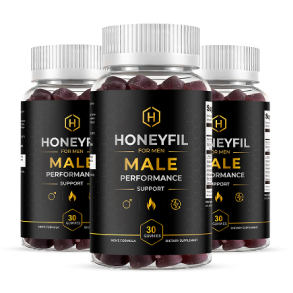
HoneyFil combines eight disclosed ingredients into a single daily gummy, formulated to support energy, healthy circulation, stamina and endurance. One-time purchase, no auto-renewal, 60-Day Satisfaction Promise.
Individual results vary.
Try HoneyFil →Common questions
How long before I can tell if a supplement is working?
A consistent 60 to 90 day period gives a reasonable window. Two weeks is not long enough, because normal variation in how you feel exceeds any subtle contribution over that timeframe.
How do I separate the supplement from other changes I made?
You largely cannot if you changed several things at once. For a clean read, change one variable at a time and note in advance anything else that shifts during the period.
Does feeling better prove the supplement worked?
Not by itself. Placebo effects on subjective outcomes are real and measurable. Whether the improvement justifies the ongoing cost is a personal judgement.
When should I stop taking a supplement?
Stop and consult a healthcare professional if you notice any adverse reaction, if a doctor advises it, or if ninety days of consistent use has produced nothing you value.
Before you start
HoneyFil is a dietary supplement intended to complement a healthy lifestyle. It is not a prescription product, and it is not intended to treat erectile dysfunction or any other medical condition.
It is not for anyone under 18, and not intended for women or anyone pregnant or breastfeeding. Speak with a healthcare professional first if you take prescription medication — particularly blood-pressure medication, nitrates, blood thinners or diabetes medication — manage a medical condition, or are preparing for a procedure.
If you have persistent concerns about sexual function, energy or circulation, raise them with a qualified healthcare professional rather than relying on a supplement.
These statements have not been evaluated by the Food and Drug Administration. This product is not intended to diagnose, treat, cure, or prevent any disease.
Back to the Honey-Fill homepage, or take a look at what goes into the formula and our honest verdict on it.