What's Inside HoneyFil
Eight ingredients, each with a stated job. Here is what every one of them is, why it earned a place in the formulation, and how much weight the evidence behind it can carry.
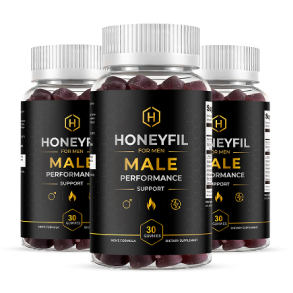
How the formulation is built
HoneyFil does not hang its identity on a single hero ingredient. The eight components divide into four groups, and understanding the grouping explains the product better than the ingredient list does.
Two amino acids handle the specific work — L-citrulline on circulation, L-carnitine on energy metabolism. Two essential nutrients provide the foundation: zinc and Vitamin B3. Four botanical extracts add the plant layer: maca root, pine bark, grape skin and saffron stigmas.
The design intent is breadth rather than depth in one place — support several foundations of men's vitality instead of concentrating everything on one.
Read our verdict on the formula →
The eight at a glance
A note on amounts, before you read further
You will not find milligram figures below, and that is deliberate. Supplement formulations and packaging change over time, while numbers published on websites and in older advertising tend to stay online long after they stop being accurate.
The Supplement Facts panel on the bottle you receive is the definitive reference. It governs serving size, ingredient amounts, directions, warnings and storage. Where the amount materially changes how you should read an ingredient, that is flagged in its entry.
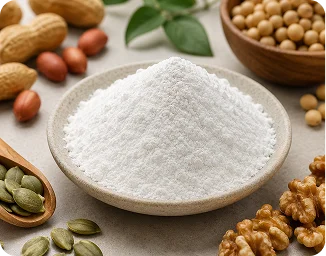
Supports healthy circulation
L-Citrulline
What it is
An amino acid your body also makes on its own, and one of the few found in meaningful amounts in food — watermelon is the best-known dietary source. It is classed as non-essential, meaning you are not dependent on diet alone to obtain it.
Its role and what the research says
Citrulline sits one step upstream in the pathway that produces nitric oxide. The body converts it into L-arginine, and arginine is the direct precursor for nitric oxide. There is a practical reason formulators reach for citrulline instead of arginine itself: arginine taken orally is heavily processed by the gut and liver before it reaches circulation, while citrulline largely bypasses that step.
Why it complements the formula
It carries the circulation side of the HoneyFil formula, working alongside pine bark extract. Because circulation underpins physical function generally, this ingredient connects to several of the areas the product is positioned around at once — not just one.
Worth knowing
Research on isolated citrulline at defined doses does not automatically describe what a combination gummy will do. The mechanism is well characterised; the outcome in any individual is not guaranteed. Anyone taking nitrates or blood-pressure medication should raise it with a healthcare professional before use, since the pathway involved is relevant to those prescriptions.
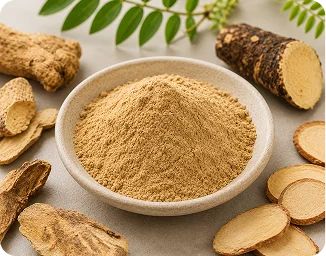
Supports energy metabolism
L-Carnitine
What it is
A compound built from two amino acids, produced in the liver and kidneys and also obtained from food — red meat is the densest dietary source. It concentrates in tissues that lean heavily on fat for fuel, notably skeletal muscle and the heart.
Its role and what the research says
Its function is transport. Long-chain fatty acids cannot cross the inner mitochondrial membrane unaided; carnitine ferries them across so they can be oxidised for energy. Without it, a major fuel source is effectively locked outside the furnace. This role is standard biochemistry rather than emerging theory.
Why it complements the formula
It pairs with Vitamin B3 on the energy side of the formula. Where niacin supports the machinery that converts fuel into usable energy, carnitine helps deliver one of the fuels to that machinery.
Worth knowing
An established metabolic role does not mean supplementation produces a noticeable subjective effect for everyone. Men already eating plenty of meat typically carry adequate stores. As with every ingredient here, the amount present matters, and that appears on the Supplement Facts panel rather than on this page.
Essential nutritional support
Zinc
What it is
An essential trace mineral. The body cannot synthesise it, so every gram you hold came from food or supplementation. It is present in every tissue and required by hundreds of enzymes.
Its role and what the research says
Zinc participates in an unusually broad set of normal physiological functions, including protein synthesis, normal cell division, immune function and wound healing. It is also one of the minerals most consistently associated with men's nutritional wellness in the research literature, which is why it appears in the majority of formulas aimed at this audience.
Why it complements the formula
It provides the nutritional foundation beneath the more targeted ingredients. Where citrulline and carnitine do specific jobs, zinc supports the general biochemistry those jobs depend on.
Worth knowing
Two practical points. First, the chemical form affects absorption — check what your label specifies. Second, zinc has a defined tolerable upper intake level, and it competes with copper for absorption at high intakes over time. If you already take a multivitamin or a separate zinc product, total your intake across everything rather than looking at one bottle.
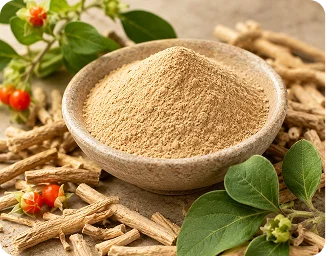
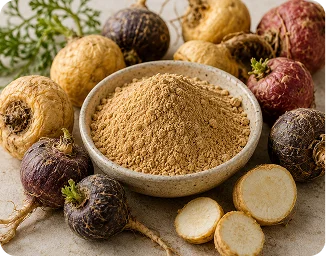
Traditional vitality support
Maca Root Extract
What it is
A cruciferous root vegetable grown at extreme altitude in the Peruvian Andes — higher than most crops tolerate. It has been cultivated and eaten as a food, not merely a remedy, for a very long time.
Its role and what the research says
Maca is traditionally associated with vitality, stamina and general wellbeing, and that traditional reputation is what brought it into modern supplements. It is worth being precise about the evidence tier here: this is centuries of traditional use plus a modern research base that is genuinely growing but still developing. It is not settled clinical science, and describing it as such would be overstating things.
Why it complements the formula
It adds a plant-based dimension to the stamina and vitality side of the formula, complementing the amino acids rather than duplicating them.
Worth knowing
Traditional use is a legitimate reason to include an ingredient, but it is a different category of support from an established nutrient role. Read claims about maca with that distinction in mind — on this site and on any other.
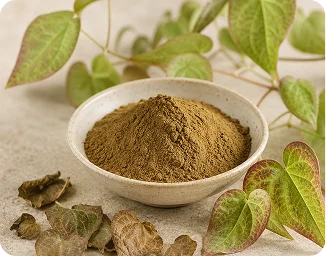
Circulation and botanical support
Pine Bark Extract
What it is
An extract taken from the bark of pine species, concentrated for its naturally occurring plant compounds — principally proanthocyanidins, a subgroup of polyphenols. The same family appears in grape seed and grape skin.
Its role and what the research says
Pine bark has been studied in relation to circulation and antioxidant activity, and it appears in circulation-focused formulations often enough to be considered a category standard. Its polyphenol content is the reason for the antioxidant framing.
Why it complements the formula
It sits alongside L-citrulline as the second circulation-associated ingredient, approaching the same area from a botanical rather than an amino acid direction. Formulators frequently pair the two for exactly that reason.
Worth knowing
Pine bark research typically involves specific standardised extracts at specific doses. Findings on one standardised preparation do not transfer automatically to every product containing pine bark. Standardisation details, where disclosed, appear on the product label.
Supports normal energy metabolism
Vitamin B3 (Niacin)
What it is
A water-soluble essential vitamin, also called niacin. The body uses it to build NAD and NADP — two coenzymes that appear in an enormous number of metabolic reactions.
Its role and what the research says
This is the most firmly established ingredient in the formula. NAD-dependent reactions sit at the centre of how cells extract energy from fuel. Niacin's contribution to normal energy metabolism and normal physiological function is textbook nutrition science, not a developing hypothesis.
Why it complements the formula
It anchors the energy side of the formula. Where carnitine helps deliver fuel, niacin supports the machinery that processes it.
Worth knowing
One practical note worth knowing: at higher intakes, niacin can produce a temporary warm flushing sensation in the skin. Whether that is relevant to you depends entirely on the amount in a serving and the form used, both of which are on the current Supplement Facts panel.
Plant-based antioxidant support
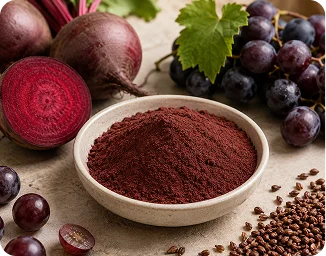
Grape Skin Extract
What it is
An extract from the outer skin of grapes — the part of the fruit carrying the deepest pigment concentration. Colour in plants generally signals polyphenol content, and grape skin is a rich example.
Its role and what the research says
Grape skin naturally contains polyphenols and other plant compounds studied for their antioxidant properties. Polyphenols are among the most heavily researched categories of dietary plant compounds, though translating laboratory antioxidant activity into specific outcomes in people remains a separate and less settled question.
Why it complements the formula
It reinforces the botanical layer of the formula, overlapping functionally with pine bark extract. Both contribute polyphenolic compounds from different plant sources.
Worth knowing
Antioxidant capacity measured in a laboratory is not the same as a health outcome. That distinction applies to every antioxidant-positioned ingredient on the market and is worth carrying into any purchase decision.
Botanical wellness support
Saffron Stigmas Extract
What it is
The stigmas of the Crocus sativus flower. Each flower produces exactly three, harvested by hand, which makes saffron the most expensive spice in the world by weight — a fact with direct relevance to how much of it appears in any formula.
Its role and what the research says
Saffron has a long culinary and traditional history, and has attracted genuine research interest across several areas of general wellness in recent decades. It is one of the more unusual inclusions in a men's vitality formula, which arguably makes it more interesting than the standard components.
Why it complements the formula
It completes the botanical layer of the formula, contributing an ingredient distinct in character from the polyphenol-heavy pine bark and grape skin.
Worth knowing
Two things to hold together. Research on saffron is real but largely preliminary. And because the raw material is extraordinarily costly, the quantity present is a particularly meaningful question — one the Supplement Facts panel on your bottle answers and this page cannot.
Three tiers of evidence, and why the difference matters
Supplement marketing tends to flatten everything into one word: "science-backed." The reality across these eight ingredients has three distinct levels.
Established nutrient roles. Zinc's essentiality and niacin's part in energy metabolism are settled nutrition science.
Studied, but developing. L-citrulline, L-carnitine, pine bark, grape skin and saffron have genuine research behind them, with the important caveat that isolated-compound findings do not transfer automatically to a combination product.
Traditional use. Maca root brings centuries of use and a modern evidence base still taking shape.
All three are legitimate reasons to include an ingredient. Presenting them as equivalent is where marketing usually goes wrong.
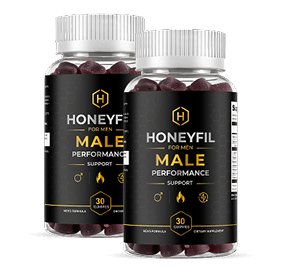
Eight ingredients. One gummy a day.
HoneyFil provides nutritional and botanical support across energy, circulation, stamina and endurance. One-time purchase, no auto-renewal, 60-Day Satisfaction Promise.
Individual results vary.
Try HoneyFil →
Questions about the formula
What is in the HoneyFil formula?
The disclosed formula contains Vitamin B3 (niacin), zinc, L-citrulline, L-carnitine, pine bark extract, maca root extract, grape skin extract and saffron stigmas extract.
Why aren't the amounts shown on this page?
Supplement formulations and packaging can change, and figures published on websites or in older advertising can fall out of date. This page names every ingredient and explains its role, and points you to the Supplement Facts panel on your bottle for amounts.
Which ingredients relate to circulation?
L-citrulline and pine bark extract are the two circulation-associated ingredients, approaching the area from amino acid and botanical directions respectively.
Which ingredients relate to energy?
Vitamin B3 (niacin) and L-carnitine. Niacin supports the metabolic machinery, while carnitine helps transport fatty acids into mitochondria for use as fuel.
Is the whole formula clinically studied?
No such claim is made. Individual ingredients carry differing levels of support, from established nutrient roles through preliminary research to traditional use. That distinction is noted for each ingredient above.
Are there interactions I should know about?
If you take prescription medication — particularly blood-pressure medication, nitrates, blood thinners or diabetes medication — speak with a healthcare professional before use and take the current product label with you.
Before you start
HoneyFil is a dietary supplement intended to complement a healthy lifestyle. It is not a prescription product, and it is not intended to treat erectile dysfunction or any other medical condition.
It is not for anyone under 18, and not intended for women or anyone pregnant or breastfeeding. Speak with a healthcare professional first if you take prescription medication — particularly blood-pressure medication, nitrates, blood thinners or diabetes medication — manage a medical condition, or are preparing for a procedure.
If you have persistent concerns about sexual function, energy or circulation, raise them with a qualified healthcare professional rather than relying on a supplement.
These statements have not been evaluated by the Food and Drug Administration. This product is not intended to diagnose, treat, cure, or prevent any disease.